


Just in Case: Emergency Preparedness for Your Wildlife Rehabilitation Facility

Nobody wants to think about the worst happening. But if you run a wildlife rehabilitation facility, a little planning now can make a huge difference when things go wrong. Whether it's a burst pipe, a power cut, or something more serious, having a clear plan means your team knows what to do, your patients stay as safe as possible, and you spend less time panicking.
Here are some key things to get in place.
Sign-in procedures
Every facility needs a staff and volunteer sign-in sheet or book. You can keep a visitor log separately or include it in the same book. This isn't just admin tidiness — in an emergency, the person in charge needs to grab that book so everyone can be accounted for quickly.
Site map
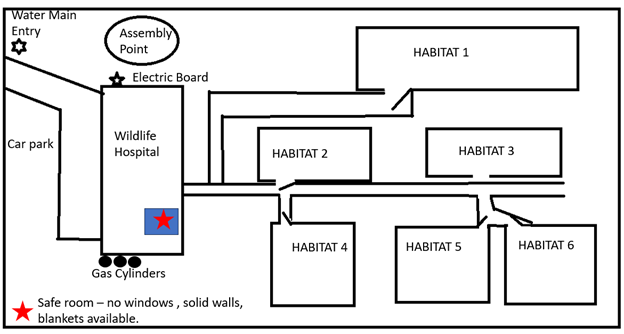
A clear site map helps your team respond faster. You can use Google Maps as a base or draw your own. Label all buildings, habitats, and key points. Make sure yours includes:
Assembly point — choose somewhere open, away from large trees or structures, and easy to reach from the road.
Water mains entrance — include photos or a diagram if any tools are needed to close the valve. Laminate or cover it in plastic so it's usable in wet weather.
Gas cylinders — confirm they're secured to regulations, and the shut-off valve is clearly marked.
Safe room — if your area is at risk of severe storms, identify the safest room on site. Aim for solid walls, no windows (or small ones that can be covered), and keep blankets there.
Fire and smoke detectors — if using standalone units, pick two dates each year to replace the batteries. If you're connected to a central fire station service, test your units with them on their recommended schedule. Run regular drills so everyone knows the routine.
Example:
Smoke/CO2 detectors and fire extinguishers
Work with your local fire service to get placement right. Then map everything on a building floor plan:
Install detectors wherever there are electrical or gas units.
Install fire extinguishers and make sure they're clearly identified.
Mark the water shut-off valves inside the building.
Label all exits clearly on the inside map.
Example:

Step-by-step emergency response
Put together a simple spreadsheet or table covering every emergency scenario relevant to your location and facility. The basic structure for each event should follow three steps:
First step — human safety always comes first. What does the team need to do immediately to keep everyone safe?
Second step — once your people are safe and the appropriate agencies have been contacted, what happens next?
Third step — who in your organisation needs to be told? Always try to have two contacts listed.
Laminate your completed table and post it in every room. Review and update it at least once a year.
In an emergency, use the following steps:
Emergency | First step | Second step | Third step |
Fire | Alert everyone to get out of the building and head to the assembly point. | Call 111, Fire Department. | Notify your designated contact. |
Flooding | Evacuate the area under water. If safe, turn off the power at the mains. | Do a head count when safe. Ensure everyone is accounted for. | Notify your designated contact. |
Power outage | Call your power company to report the issue (have your account number ready). | Conserve heat where needed. Cover incubators. | Notify your designated contact. |
Burst pipes | Turn the water off at the nearest in-line tap or at the main entrance. | Call your plumber. | Notify your designated contact. |
Abusive/aggressive person | Move away and, if possible, lock doors. Direct staff and volunteers to the designated safe place. | Call 111, Police. | Notify your designated contact. |
Storm with lightning | Ensure everyone is under cover. | Do a head count when safe to move about. | Notify your designated contact. |
Injured person | Manage any life-threatening issue. Call for help from staff or volunteers. | Call 111 Ambulance for severe injuries, unconsciousness, or seizure. | Notify your designated contact. |
Landslip | Evacuate the damaged part of the building. If safe, turn off power/gas at the mains. | Do a head count when safe. Ensure everyone is accounted for. | Notify your designated contact. |
Earthquake | Stop, drop and cover until safe to move. | Do a head count. If needed, move to higher ground. | Notify your designated contact. |
Tsunami | Move everyone to higher ground if in a low-lying area. | Wait until the all-clear is given. | Notify your designated contact. |
Phone outage | Call your phone service provider (have your account number ready). | Post a notification on your website if using landlines. | Notify your designated contact. |
Evacuation order | Check every staff member and volunteer out. | If allowed, ask all personnel to help remove vulnerable patients. | Notify your designated contact. |
Gas leak | Evacuate all personnel. Turn all gas cylinders off. | Call your gas company. Vent the building. | Notify your designated contact. |
Tornado warning | Gather all staff and volunteers in the designated safe zone. | Wait for the all-clear. Check the facility for damage. | Notify your designated contact. |
A final note
This kind of planning can feel overwhelming, but you don't have to do it all at once. Start with your sign-in book and a basic site map. Add the emergency table. Then review it with your team so everyone knows where things are and what to do.
The animals in your care are lucky to have people who plan ahead for them. Your team is too.
This article was written by
Lynn Miller, CWR, PhD, CEO WildWays Ltd


Comments