


The Wayward Weka Pair That Stumped Taranaki

Sometimes, taking care of native wildlife means getting involved in a mystery.
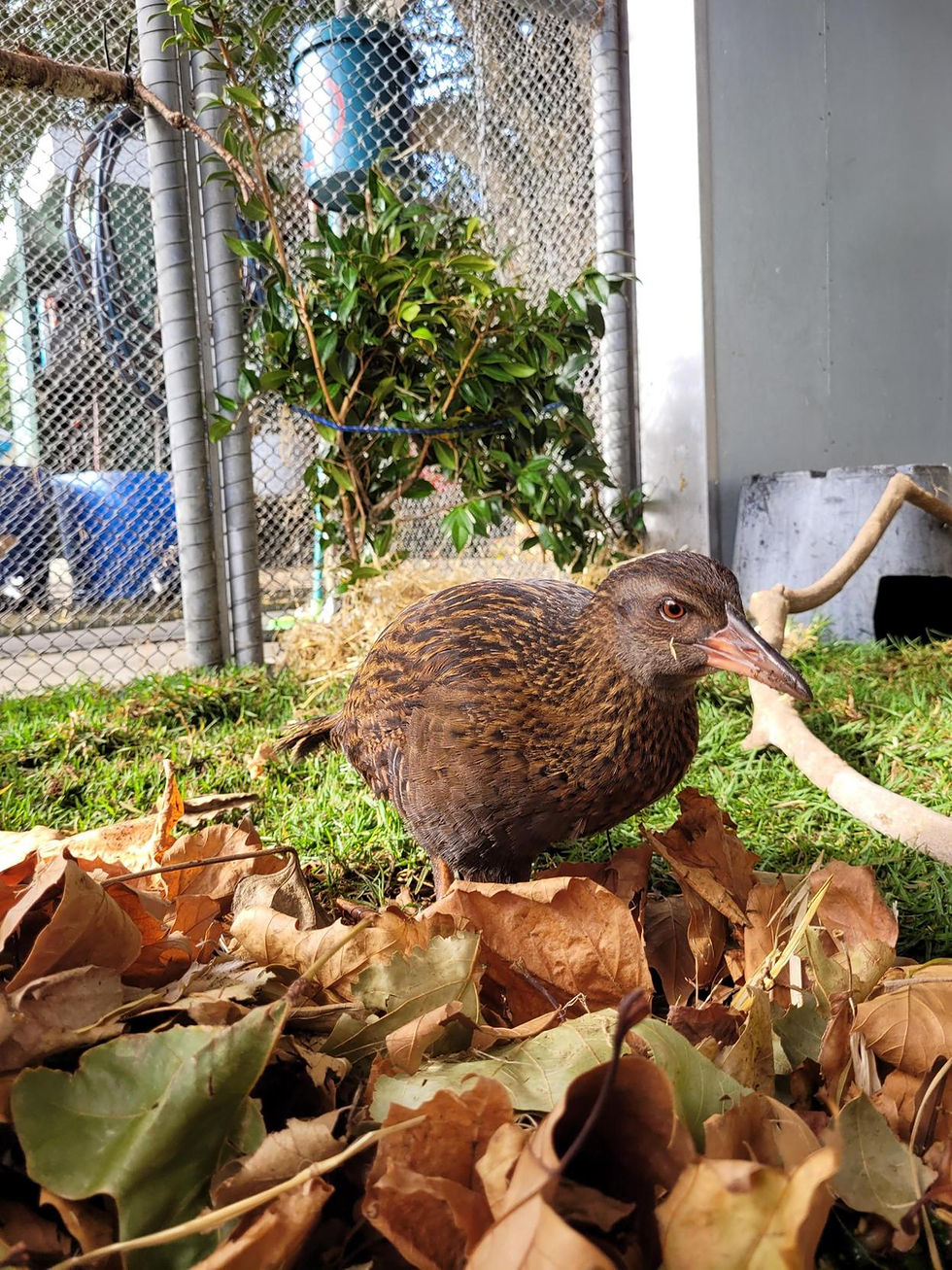
For Brooklands Zoo staff in New Plymouth, the case of the improbable weka was the most remarkable rehab project we’ve taken on in years.
An unlikely sighting
It started with news stories in 2023 that two weka had been spotted in Manaia, South Taranaki. Why was that unusual? Because weka don’t live in Taranaki. They disappeared from the region in the late 1930s, and the only existing North Island populations are in the east and north.
Brooklands Zoo came into the story after local residents managed to catch the weka, who then needed a home while the Department of Conservation (DOC) investigated the circumstances of their appearance.
A new species for our team
As part of the zoo’s commitment to wildlife conservation, we hold a Wildlife Rehabilitation Permit and partner with the New Plymouth Vet Group to rehabilitate injured and orphaned native birds. These birds are held off-display, away from the public, until they’re fit for release.
We tend to help a lot of kererū get back into the wild – we’ve had 23 of them in our care in the last four years – but we’ve also rehabbed a range of other species, including tūī, ruru, kotare, pāpango and a shining cuckoo/pīpīwharauroa. But weka? This was a new species for us.
The team stepped up to the challenge, and we ended up caring for these charismatic birds for several months. Keeper staff quickly recognised that the two weka had vastly different personalities. The juvenile was inquisitive and food-motivated and engaged with most of the natural behavioural enrichment provided. The older bird was largely disinterested in food and its surroundings, which created some challenges. Even so, both birds’ weights remained stable and they stayed in good health while in our care.

Solving (most of) the mystery
As for the mystery behind why they appeared in Manaia, we’ll never know for sure. DOC’s DNA tests confirmed that the birds originated from the upper South Island, so it’s likely they were illegally released in Taranaki. The birds couldn’t be returned to the wild, though, because their precise origin couldn’t be determined, and DOC didn’t want to risk muddling weka genes or transmitting diseases to wild populations.

After the Weka Recovery Group discussed appropriate transfer options, the birds were eventually rehomed at Willowbank Wildlife Reserve in Christchurch, where they quickly settled in and continue to do well.
Written for WReNNZ by
By Eve Cozzi, Lead, Brooklands Zoo


Comments